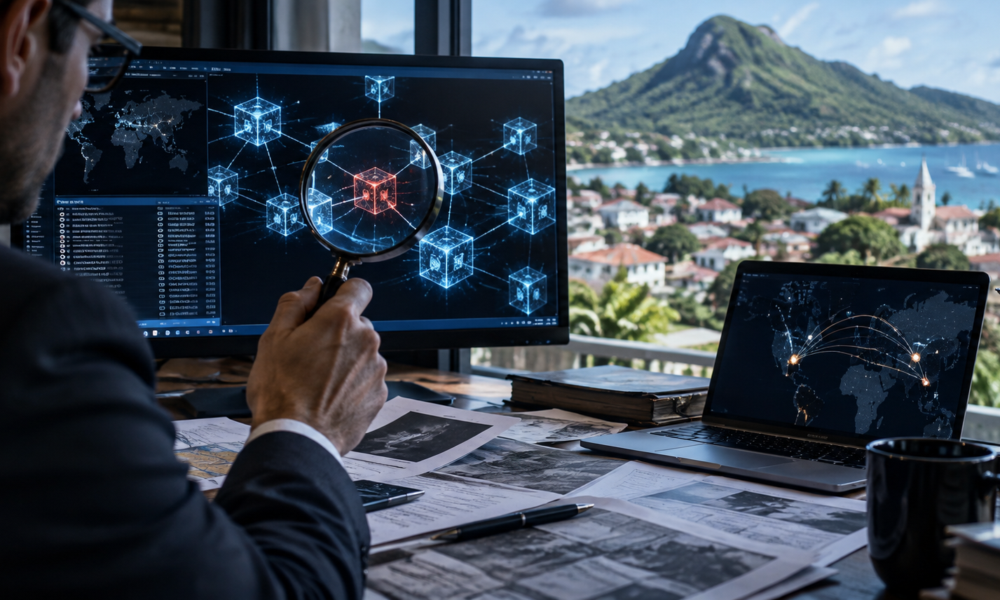
The Unseen Threat: How AI Challenges Digital Evidence and Forensic Integrity

The rapid evolution of Artificial Intelligence, particularly in generative models, presents unprecedented capabilities—and equally unprecedented challenges. While AI promises innovation, recent incidents involving tech giants like Google and Meta have starkly illuminated its dual-use nature, demonstrating how easily advanced AI tools can be repurposed to fabricate convincing digital evidence. For digital forensic investigators and legal professionals, this development represents a profound erosion of trust in digital imagery and a significant hurdle in the pursuit of truth.
The Recurring Pattern of Foreseeable Misuse
A troubling pattern has emerged: major technology companies are consistently launching AI image generation features only to retract them swiftly after public outcry exposes obvious, foreseeable misuses. Google's recent Google Earth feature, which allowed users to generate photorealistic scenes grounded in real locations—such as fake disaster zones—was pulled within a day of launch. Similarly, Meta withdrew an Instagram AI tool that utilized public profiles as reference material without explicit consent, sparking immediate privacy concerns.
This cycle of "ship, demonstrate, retract" highlights a critical flaw in internal review processes. Foreseeable deceptive applications, which should be identified during development, are instead being discovered by the public. This phenomenon underscores the power of Open-Source Intelligence (OSINT); collective scrutiny from researchers and the general public often acts as an indispensable early warning system, revealing vulnerabilities and potential for abuse far more rapidly than internal teams. The immediate public reaction demonstrates an instinctive understanding of the profound implications for digital trust.
From Marketing Demo to Fraud Scenario
The very features designed for legitimate, creative, or practical applications can be effortlessly transformed into tools for deception. A marketing demonstration showcasing AI's ability to "add a cabin to an empty lakefront lot" becomes, in a fraudulent context, "add storm damage to this roof" for an insurance claim. A tool that reimagines an urban intersection for city planning can equally be used to create false narratives in accident reconstruction or legal disputes.
This seamless transition from benign utility to malicious application is particularly concerning. The source material for these manipulations often carries significant weight in legal and financial contexts. For instance, fabricated receipts, invoices, or property damage imagery can lead to various forms of financial fraud, including schemes designed to illicitly claim insurance benefits or manipulate tax deductions. The ease with which these documents can be generated poses a direct threat to the integrity of financial systems and necessitates heightened vigilance from forensic accountants and investigators.
The Deepening Crisis of Digital Evidence Authenticity
Courts have long grappled with the authentication of digital evidence, recognizing that images and videos can be subject to malfunction or tampering. However, the advent of sophisticated AI generative tools introduces a new paradigm. Parties no longer require specialized software, source data access, or advanced image-editing skills to produce highly plausible, location-grounded synthetic visuals. It now takes mere seconds and a simple text prompt.
For digital forensic investigators, the challenge is no longer just about detecting traditional manipulation; it's about discerning the very genesis of an image. Establishing the provenance and chain of custody for digital evidence becomes paramount. We must ascertain: What is the true source of this image? What processes occurred between its origin and its presentation? Can this process be independently reproduced and verified? The critical shift is not in the existence of the authentication question, but in the speed, accessibility, and visual credibility of the manipulation, which has been democratized by AI. While blockchain technology offers potential solutions for creating immutable records of digital asset origins, its widespread adoption for general image provenance is still nascent, leaving a significant gap in verifiable authenticity for much of the digital content we encounter today.
The Limitations of Current Safeguards and the Enduring Threat
In response to these concerns, companies often announce safeguards like watermarking. However, the effectiveness of these measures remains questionable. Public tests of Google's own SynthID watermark, designed to identify AI-generated content, yielded unreliable results when queried by Google's Gemini chatbot. This suggests that current public verification paths are insufficient to reliably detect high-risk synthetic images, further eroding public confidence.
Crucially, even when a feature is "rolled back," the underlying capability has been demonstrated. The public now understands that highly convincing, location-grounded synthetic images can be created rapidly from trusted geospatial environments. This knowledge permanently alters the threat landscape. Digital forensic investigators must now operate under the assumption that virtually any digital image could be AI-generated, demanding more sophisticated and robust authentication methodologies to uphold the integrity of evidence in legal proceedings.
Conclusion
The rapid proliferation of AI-driven image generation tools presents an urgent and evolving threat to the authenticity of digital evidence and public trust. The recurring pattern of foreseeable misuse underscores the critical need for proactive ethical considerations and rigorous internal review processes within technology companies. For professionals in digital forensics, blockchain investigation, and OSINT, this era demands continuous adaptation, advanced tools, and unwavering commitment to verifying the truth in an increasingly synthetic digital world.
Need expert assistance with digital forensics, blockchain investigation, or OSINT? Agam Setyono provides professional consultation services. Get in touch for a confidential discussion.